Commercial Solar
+ Fleet EV Charging
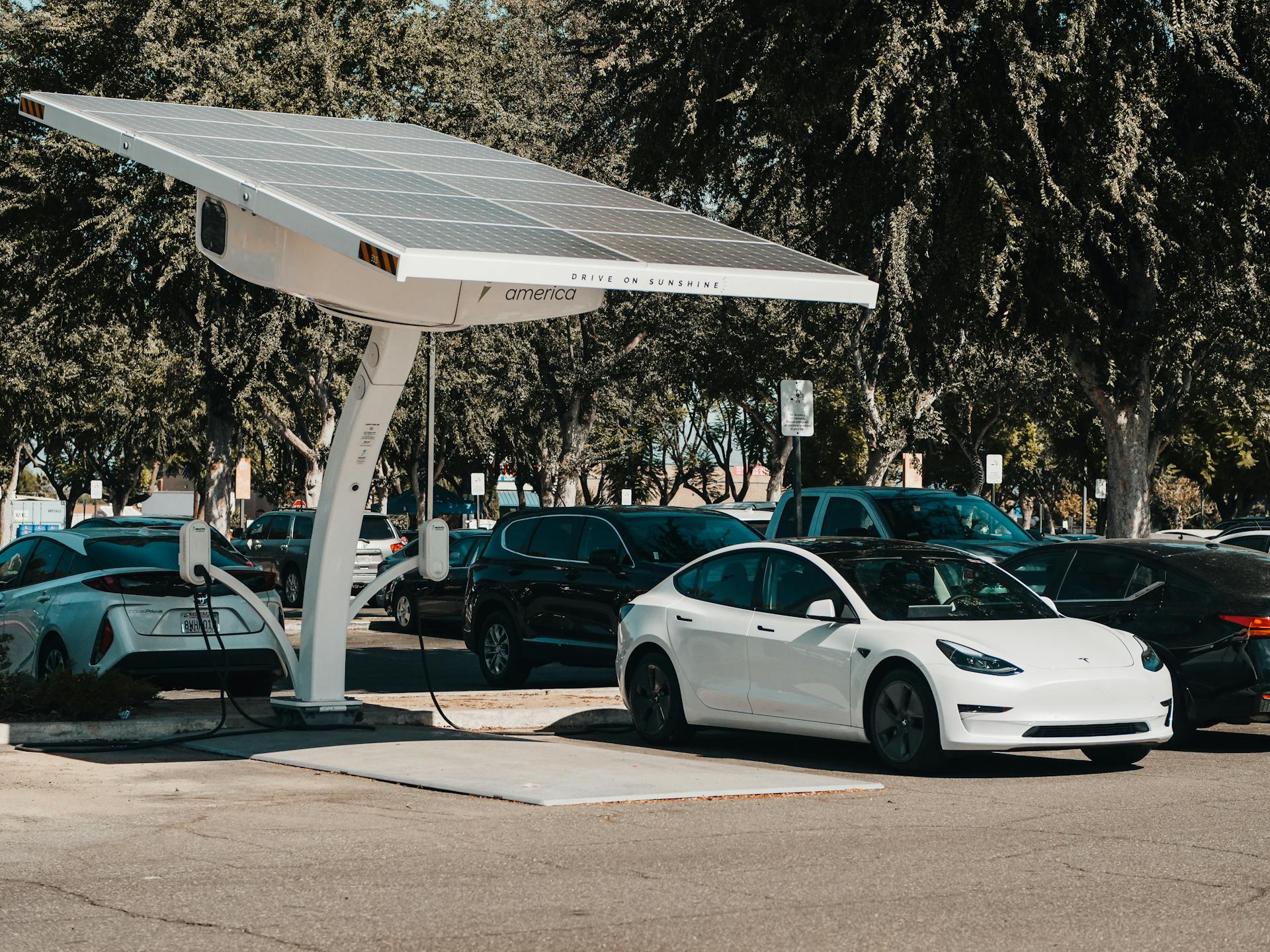
Generate your own electricity and charge your fleet for free. The complete guide to combining rooftop solar with workplace EV infrastructure.
500+
Installations
15MW
Capacity Installed
98%
Customer Satisfaction
10yr
Workmanship Warranty
Why Combine Solar with EV Charging?
The UK's 2035 ban on new petrol and diesel vehicles means every business with a vehicle fleet is facing an inevitable transition to electric. The question is not whether to electrify, but how to manage the energy costs of doing so.
Combining rooftop solar with workplace EV charging creates a synergy that neither technology achieves alone. Solar generates electricity at approximately 4-5p/kWh over its lifetime. Grid electricity costs 25-35p/kWh. Charging your fleet from your own roof effectively eliminates fuel costs for those vehicles during daylight hours.
For Hull businesses with commercial premises and vehicle fleets — from delivery vans and sales rep cars to logistics trucks and service vehicles — this combination represents the single most impactful investment in operational cost reduction available today.
4-5p/kWh
Solar Generation Cost
Lifetime cost of solar electricity, fully installed. Compare to 25-35p/kWh from the grid.
£8-15k/yr
Typical Fleet Savings
A 10-vehicle fleet charging from solar saves £8,000-£15,000 per year in fuel costs vs diesel, and £3,000-£6,000 vs grid-charged EVs.
20-30%
Combined ROI
Annual return when solar displaces both building electricity and vehicle fuel costs simultaneously.
24/7
Battery Buffer
Add battery storage to charge vehicles overnight from stored solar energy, extending solar benefits to 24/7 fleet operations.
How the System Works
Daytime: Direct Solar Charging
During daylight hours, rooftop solar panels generate electricity that flows directly to EV chargers in your car park. Vehicles plugged in during the working day charge at the cost of solar generation (~4-5p/kWh) rather than grid rates. This is the simplest and most cost-effective configuration.
Peak Shaving with Smart Charging
Smart EV chargers modulate their charging speed based on available solar generation. When solar output exceeds building demand, surplus flows to vehicles. When building demand peaks, chargers throttle back. This prevents demand charge spikes on your electricity bill and maximises self-consumption.
Adding Battery Storage
For businesses with vehicles that need charging overnight (return-to-base fleets), adding commercial battery storage enables solar energy captured during the day to be stored and dispensed to vehicles overnight. This extends solar-powered charging beyond daylight hours.
Worked Example: 10-Vehicle Fleet
A Hull-based distribution company with 10 electric vans (60kWh battery each), a 100kW rooftop solar system, and smart chargers:
100 kW
Solar System
10
EV Fleet Size
85,000 kWh
Solar Generation
£12,500
Annual Saving
- Solar powers building loads first, surplus charges vehicles
- Average 35-50 kWh/day available for fleet charging from solar alone
- Fleet charging cost: ~4p/kWh vs 30p/kWh grid rate
- Compared to diesel: saving ~£1,250/vehicle/year in fuel
- Total system payback (solar + chargers): 4-5 years
- Company car BiK benefit: 2% vs 37% for equivalent diesel vehicles
Tax Benefits
Both solar panels and EV chargers qualify for the 100% Annual Investment Allowance, enabling full first-year tax deduction. For a combined £100,000 installation (solar + chargers), this delivers an immediate corporation tax saving of £25,000 at the current 25% rate.
Electric vehicles themselves qualify for 100% first-year capital allowances through the super-deduction for zero-emission cars. Company car Benefit-in-Kind (BiK) rates are 2% for EVs vs up to 37% for diesel — a significant employee benefit.
The 100% business rates exemption on rooftop solar (until 2035) means no additional rates liability for the solar installation. EV chargers are also exempt from business rates under the plant and machinery rating exclusion.
Charger Types for Commercial Sites
- 7kW AC (Type 2): Standard workplace chargers for employee cars parked all day. Full charge in 6-8 hours. Cost: £800-£1,200 installed per point.
- 22kW AC (Type 2): Faster workplace charging for vehicles parked shorter periods. Full charge in 2-3 hours. Cost: £1,500-£2,500 installed.
- 50-150kW DC (CCS): Rapid chargers for fleet vehicles needing fast turnaround. 80% charge in 20-45 minutes. Cost: £25,000-£60,000 installed.
For most commercial fleets, a combination of 7-22kW chargers provides the best balance of cost and utility. Vehicles parked during working hours gain a full charge from solar at minimal infrastructure cost.
Related Guides
Solar + EV Assessment
Tell us about your fleet and premises. We'll model the combined solar + EV charging returns for your specific situation.
Get AssessmentStart Your Project Today
Ready to reduce operational costs or improve your home's rating? Fill out the form for a free, no-obligation survey. We operate throughout Yorkshire.
Email Us
Visit HQ
Office 4, Blanket Row, Hull, HU1 1TB
